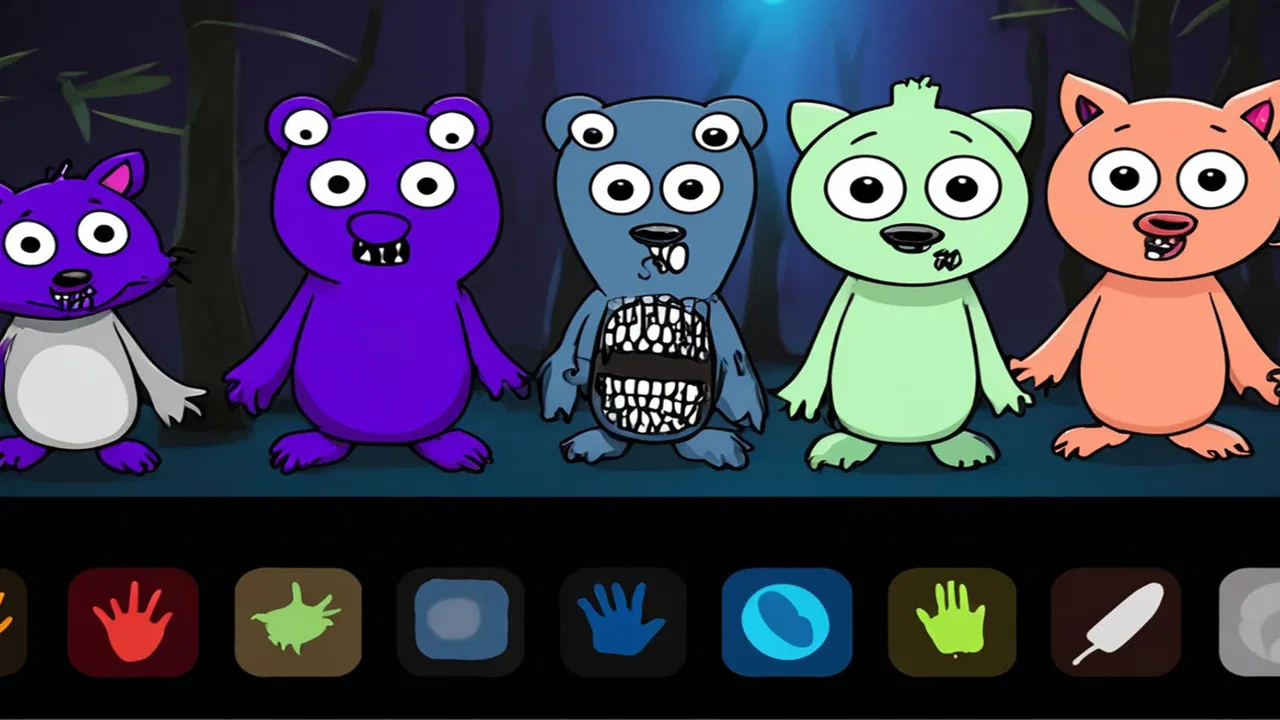
Sprunki Beats Phase 4
- 3.7
- Rating
- 100.00K
- Installs
- Free
- Price

 Analysis by App-foxy
Sprunki Beats Phase 4 is a free music game from Novelab LLC that caught my attention because it aims for a quick, playful experience rather than presenting itself as a serious music-learning tool. I spent time looking at it as the sort of game someone might open during a short break, test with headphones, and either keep nearby for casual sessions or remove after a few minutes if the interaction does not click. Its basic appeal is easy to understand: tap into a music-themed game, experiment, and have fun without paying to begin.
That simplicity is also the key to judging it fairly. The store summary promises fun, but it does not explain the depth of the gameplay, the shape of its progression, or how much variety appears after the first session. I therefore see this as a light entertainment title first, not a replacement for a rhythm-training app, a full music-making workstation, or a competitive game built around deep rankings. My main recommendation is to treat it as a low-commitment musical diversion and decide whether its interaction feels satisfying on your own device.
What the game offers before you commit
The game is listed in the Music category, which gives a useful hint about its intended mood but not necessarily its exact mechanics. I would approach it expecting an experience organized around sound, timing, or playful musical interaction, rather than assuming it teaches notation, records polished compositions, or provides professional editing tools. That distinction matters because people often use the word “music game” for very different products.
You May Also Like

 AccuWeather: Weather Radar
AccuWeather Review: A Quick, Clear Forecast for Everyday Decisions
For everyday plans, the best forecast is the one you can understand quickly. AccuWeather makes rain timing, radar, and local conditions easy to act on, with a few trade-offs.

 Hill Climb Racing
Why Hill Climb Racing Still Turns Crashes Into One More Run
A tiny car, a bumpy hill and one more upgrade: Hill Climb Racing keeps resurfacing because its simple chaos makes every near-miss feel personal.

 AliExpress - Shopping App
AliExpress Makes Global Shopping Feel Personal, but Shoppers Bear the Risk
AliExpress turns a global marketplace into a pocket-sized discovery engine. Its reach is useful, its shopping loop compelling, and its trade-offs easy to miss.

 Lords Mobile: Kingdom Wars
Lords Mobile Is a Kingdom-Building Routine, Not a Quick Match
A case-by-case verdict on the building, battles, device demands, and social commitments that make Lords Mobile rewarding for some players and exhausting for others.

 PDF Scanner app - TapScanner
TapScanner Makes Paperwork Easier to Capture, Check, and Share
TapScanner makes scanning with a phone feel less like a rescue operation and more like a dependable step in getting work done. Its capture tools are useful, though not flawless.

 Block Blast!
 Shows How Much a Puzzle Game Can Leave Out
A quiet grid game shows why puzzle players increasingly value instant clarity, repeatable skill and low-pressure play—and where the genre still needs to catch up.
More From Our News Desk
View All News


It is free to download, so the first decision is not financial. You can try it without buying access upfront, which makes it easier to judge the controls, sound presentation, and replay value personally. At the same time, a free entry point should not automatically be confused with a complete promise of unlimited content. The listing does not establish a purchase structure, so I would avoid planning around paid upgrades or assuming that spending is required for progress.
The developer is Novelab LLC, and the current release is version 1.0. That version label makes me approach the experience with a little patience. A first release can feel focused and straightforward, but it can also have rough edges, limited variety, or small usability details that later updates might improve. I would not reject the game simply because it feels modest, yet I would keep expectations realistic rather than expecting the breadth of a long-running music platform.
Compatibility is another practical point. The game requires Android 5.1 or later, which covers many older Android devices. That is helpful if you are using a spare phone or an older tablet for casual play. Still, operating-system compatibility alone does not guarantee identical sound quality or responsiveness across hardware. For a timing-sensitive game, I would test it on the device and headphones I actually plan to use instead of judging it from technical requirements alone.
The age rating is Everyone, so the game is positioned for a broad audience. That makes it a reasonable candidate for a family device or for someone who wants something uncomplicated. I would still play it myself before handing it to a child, not because the rating signals a specific problem, but because the real question for younger players is whether the controls are understandable and whether the session length feels comfortable.
How I would test it on the first day
My first session would be deliberately short. I would begin with the device volume at a comfortable level, try the main interaction without multitasking, and pay attention to whether the response feels immediate. In music games, a tiny delay can make an otherwise attractive idea feel disconnected from the audio. This is one of the most useful checks a store page cannot provide.
I would then repeat the same activity after changing the phone’s orientation or moving from the built-in speaker to headphones, if those options are available on the device. The purpose is not to hunt for problems, but to understand whether the game works best as a private headphone experience or as something suitable for a shared room. That distinction affects when I would actually use it.
A second useful test is to stop playing and return later. A casual game earns a place on my phone when I can remember what I was doing without needing a long tutorial or a complicated setup. If the experience depends on constant rediscovery, it may still be entertaining, but it becomes less useful for short everyday breaks.
Progress without assuming a large campaign
Because the available description is brief, I would not assume that Sprunki Beats Phase 4 contains a long campaign, unlock tree, or deep collection system. The sensible way to evaluate progress is to ask whether each session gives me a reason to try again. That reason might come from improving timing, exploring a different musical interaction, or simply enjoying the sound and visual response. I would not measure it only by the number of stages or rewards.
This is also where the game may divide players. Someone who enjoys experimenting with a small musical toy can find value in repeating familiar actions and trying to become more consistent. Someone who needs a clearly signposted journey, frequent unlocks, and a strong sense of completion may find the experience too light. Neither reaction is wrong; they reflect different expectations from the Music category.
My practical advice is to notice whether your second session feels different from your first. If you are making deliberate choices and improving your timing, the game has some personal replay value. If you are only repeating the opening because there is no obvious next step, then its free price may be its biggest advantage: you can move on without having made a financial commitment.
Where pressure can appear even in a free game
Free games can create pressure through many routes, including purchases, timers, advertisements, or progression gates. I would not claim that any of those systems are present here because the available product details do not establish them. Instead, I would look at the actual play experience before deciding whether the game feels relaxed or demanding.
The most important question is whether I can enjoy a normal session without being pushed toward spending. Since the game is free to start and no purchase details are established, I would not budget money for it or assume that buying something will improve the experience. If a payment screen appears, I would read exactly what it offers, whether it is optional, and whether it affects access or only convenience before making a decision.
For parents, that means the Everyone rating answers the content-age question but does not by itself answer the spending question. I would use the device’s purchase protections and let a child play only after checking the account settings. That is sensible for any free game, especially when the store page does not give a detailed explanation of its commercial model.
Fairness, competition, and the limits of what can be judged
I cannot honestly call the game competitive or noncompetitive without seeing a confirmed ranking, score-sharing, or multiplayer structure. If your interest is fair head-to-head play, I would first look for an actual score comparison inside the game. A music game can be challenging while remaining entirely personal, and personal improvement is a different kind of fairness from a leaderboard.
If the experience is mainly about timing and musical response, fairness should come from consistent input handling rather than from paid advantages. I would pay attention to whether the same action produces the same result, whether visual cues match the sound, and whether the game rewards accuracy instead of simply encouraging longer sessions. These are better indicators of fair design than the presence of a high score alone.
I would also separate device performance from player ability. A newer phone, better speakers, or lower audio delay can make a timing game feel more comfortable, but that does not automatically mean the game sells a competitive advantage. It does mean that comparisons between players may be imperfect unless they use similar hardware and settings. For private play, this is a minor issue; for serious competition, it matters much more.
This is one reason I would not compare it directly with established rhythm games that advertise extensive song libraries, formal difficulty levels, or large online communities. Those alternatives are better for players who want structured mastery and visible competition. Sprunki Beats Phase 4 seems more appropriate when the goal is to interact with a music-themed idea quickly, without committing to a large ecosystem.
It may also be a better fit than a full digital audio workstation for someone who wants immediate play rather than recording, arranging, mixing, or exporting. On the other hand, if you want to create a track you can keep, edit, and share as a finished project, a dedicated music-making app is the more suitable choice. The game should be judged by its moment-to-moment entertainment, not by tools it was never clearly presented as offering.
Everyday situations where it makes sense
I can imagine opening it while waiting for an appointment, taking a short break between tasks, or passing a phone to a friend who wants to try something musical without reading a long explanation. Its free access makes that kind of spontaneous use easy. A short session can answer the most important question quickly: does the rhythm or interaction feel enjoyable enough to return to?
It could also work as a small shared activity at home, provided the device volume is comfortable and everyone understands that it is a game rather than a complete music lesson. I would let one person demonstrate first, then give another player a turn. That approach avoids turning a simple title into a performance test and makes the experience more welcoming for people who are not already familiar with rhythm games.
For commuting, I would be more cautious. Headphones may make the music easier to follow, but I would not use any game that demands visual concentration while walking, cycling, or handling transport. The best use case is a stationary break where you can focus on the screen and audio for a few minutes.
Players who should probably skip it are those looking for a substantial story, a confirmed long-term progression system, detailed music production, or a well-defined competitive scene. They may be happier with a rhythm title known for extensive content or with a creative audio app. I would also skip it if the first session feels repetitive and there is no personal desire to improve, because the free download alone is not a reason to keep an app installed.
What the rating and audience response tell me
The game has an average rating of 3.9 from around ninety-five ratings, with only a small number of written reviews. That combination gives me a cautious but useful signal: enough people have rated it to show that it has been tried, but not enough detailed commentary to explain every strength or weakness. I would treat the score as a prompt to test it myself, not as proof that it will perform identically for everyone.
It has passed fifty thousand installs, which suggests that the concept has reached a meaningful group of Android users. That is encouraging for discoverability, but install volume does not tell me how deep the gameplay is or how long people stay. I would still make the decision based on the first-session checks: responsiveness, sound comfort, clarity, and whether the game gives me a reason to come back.
The release date is December 11, 2025, and the version is 1.0. Those details reinforce my view that this should be approached as an early-stage experience rather than a mature platform with years of refinement behind it. If Novelab LLC updates it, I would pay attention to whether those updates improve clarity, variety, accessibility, or the handling of any purchase prompts. Until then, I would value what is present rather than imagining a future roadmap.
My trust verdict before installing
I find the game easy to justify as a trial because it is free, aimed at Everyone, and available for Android devices running version 5.1 or later. The low financial barrier is meaningful: I can test the controls and decide quickly without treating the download as a major commitment. I would install it for casual musical play, especially if I wanted something lighter than a full rhythm library or music-production tool.
My trust is more measured when it comes to long-term value. The short store description does not give enough detail for me to promise a deep progression system, a particular multiplayer format, or a specific purchase experience. That is not a criticism of the game by itself; it simply means I would keep my expectations narrow and inspect the actual interface before spending, sharing personal information, or giving it a permanent place on my device.
The fairest way to approach Sprunki Beats Phase 4 is as a free experiment, not an investment. Give it a focused first session, check whether the audio and controls feel natural, and see if your interest comes from genuine musical play rather than from pressure to continue. If that small interaction makes you smile or encourages you to improve, it can be a pleasant pocket game. If you need deep content, transparent competitive systems, or established music-creation tools, choose a more specialized alternative instead.
Overall, I would recommend trying it to curious casual players, families looking for a simple music-themed game, and Android users who enjoy testing compact releases. I would not recommend installing it with expectations of a complete rhythm-training course or a professional audio workspace. Sprunki Beats Phase 4 works best when its modest scope is part of the appeal: open it, play, judge the feel for yourself, and keep it only if the music interaction earns another session.
FAQs for Sprunki Beats Phase 4
01What is Sprunki Beats Phase 4 and what makes it unique?
Sprunki Beats Phase 4 is an innovative music creation app designed for both amateur and professional musicians. Its uniqueness lies in its AI-driven beat creation feature, which allows users to generate complex rhythms effortlessly. The intuitive interface and vast library of sounds make it a standout choice for music enthusiasts seeking inspiration.
02Is Sprunki Beats Phase 4 suitable for beginners in music production?
Yes, Sprunki Beats Phase 4 is beginner-friendly. It includes a comprehensive tutorial section that guides new users through the basics of beat making. The app’s user-friendly design and smart suggestions help beginners create professional-sounding tracks without needing extensive knowledge of music production.
03What platforms is Sprunki Beats Phase 4 available on?
Sprunki Beats Phase 4 is available for both Android and iOS devices. The app is optimized for a wide range of smartphones and tablets, ensuring a seamless experience regardless of the device. Users can download it from the Google Play Store or the Apple App Store, depending on their device.
04Does Sprunki Beats Phase 4 offer in-app purchases or subscriptions?
Yes, Sprunki Beats Phase 4 offers in-app purchases and subscription options. While the basic version is free and provides essential features, users can purchase additional sound packs and effects or subscribe for a premium experience that unlocks advanced tools and exclusive content.
05Can I collaborate with other users on music projects in Sprunki Beats Phase 4?
Absolutely! Sprunki Beats Phase 4 includes a collaboration feature, allowing users to work together on projects seamlessly. You can invite friends to contribute to your tracks, share ideas, and edit compositions in real-time, making it a great tool for collaborative creativity.
Pros
- Intuitive interface for easy navigation.
- High-quality sound effects and music.
- Customizable beat patterns available.
- Regular updates with new features.
- Offline mode for on-the-go creativity.
Cons
- Limited free version features.
- Occasional lag on older devices.
- In-app purchases can be pricey.
- Requires significant storage space.
- Some features need internet connection.

Sprunki Beats Phase 4
Gallery